
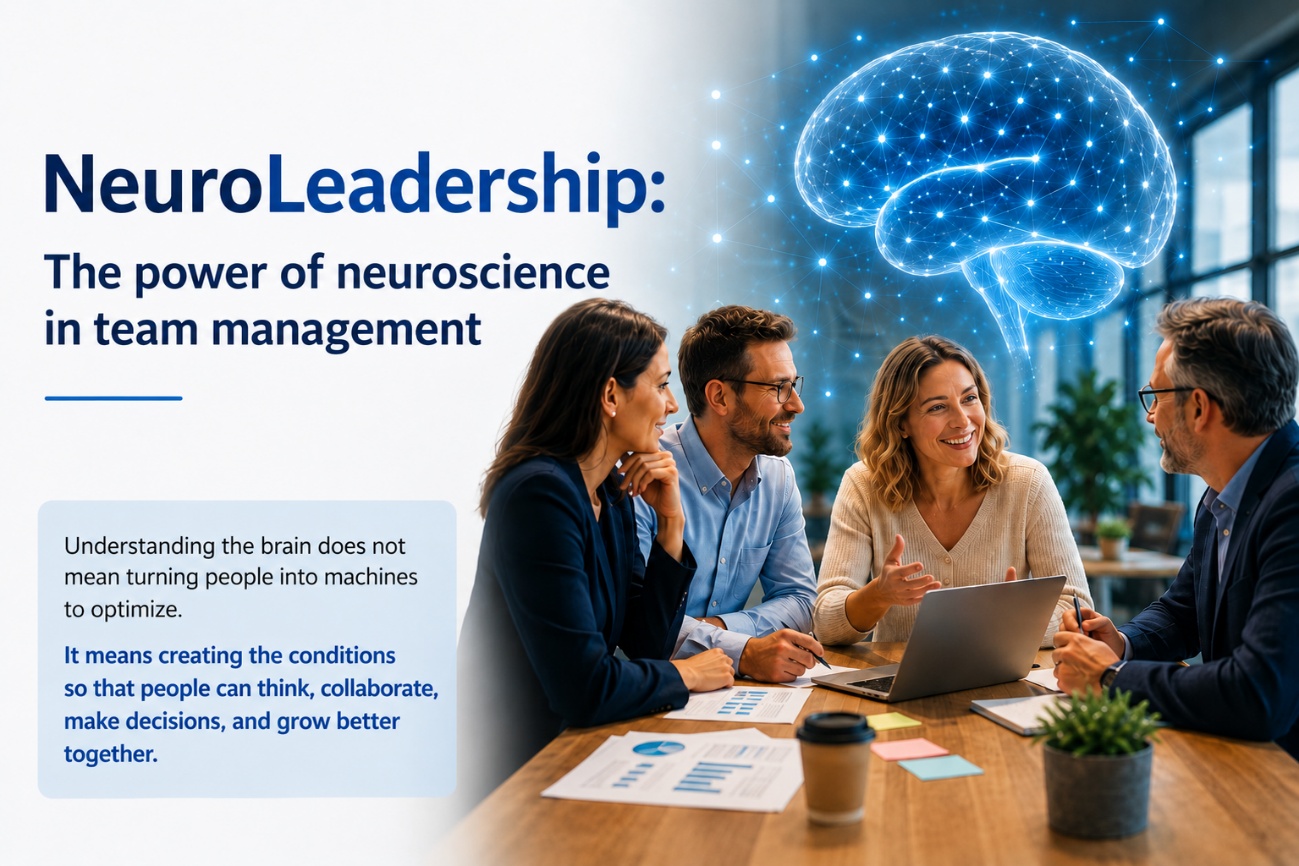
Understanding the brain does not mean turning people into machines to be optimized. It means creating the conditions in which they can think, collaborate, make decisions, and grow better together.
We spend the most substantial part of our weeks in the workplace—often around forty hours, depending on the country and the profession. Finding fulfilling work is a rare privilege, but it is not enough: it is the people with whom we share those hours who truly make the difference. The quality of the team climate does not remain confined to desks or assembly lines; it affects our emotional well-being, our relationships, and the value of the time we experience outside work.
Every department is structured around roles and hierarchies, and each member performs a necessary function in achieving a common goal, whether that means launching a project in a startup or assembling a piece of machinery. But a team’s performance is not simply the sum of its individual competencies—and it is precisely in this gap that leadership comes into play.
It is worth stating one thing clearly from the outset, because this is one of the points that research over the past twenty years has made increasingly clear: a leader is not the pillar holding the team up; a leader is the person who creates the conditions in which the team can stand on its own.
The distinction is not merely rhetorical. A pillar bears a load, and if it gives way, everything collapses. Someone who creates the right conditions makes something possible that would not otherwise happen, but that does not need to pass through them every time. As we will see, when Google set out to identify what distinguishes high-performing teams, “having a good manager” did not emerge as one of the decisive factors. The way people interacted with one another did.
We have all encountered a tyrannical boss, and most of us have also had the good fortune to meet at least one leader who could make our work feel meaningful and valued. Neuroscience and occupational psychology now study precisely this question: how different leadership styles influence the brain and the behavior of the people exposed to them. These studies have given rise to practical models—with all the necessary caveats, because translating a laboratory finding into a workplace rule is a step that must be taken with intellectual honesty.
Effective leadership is not based solely on strategy and vision. It also depends on understanding how people respond, both cognitively and emotionally, to the behaviors of those who lead them.
One example that has been studied for decades is transformational leadership: inspiring a shared vision, challenging established processes, supporting people’s development, and leading by example through one’s own behavior.

Transformational Leadership. The Leader is an integral part of the Team
The Five Levers of the Social Brain
The term neuroleadership is attributed to David Rock, who, in the mid-2000s, proposed an approach to understanding group dynamics based on a simple principle: the brain responds to social threats by activating alert systems that partially overlap with those involved in the perception of physical threats.
Being reprimanded in front of others, being excluded from an important decision, or having a rule applied inconsistently are therefore not merely unpleasant experiences. They can be perceived by the brain as threat signals, mobilizing cognitive resources that, under conditions of psychological safety, would otherwise be available for focusing, collaborating, and making decisions.
To describe these dynamics, Rock developed the SCARF model, an acronym identifying five fundamental dimensions of social experience:
- Status — our perception of our value, importance, and position relative to others.
- Certainty — the degree to which we can predict events and understand what is expected of us.
- Autonomy — the degree of choice and control we perceive over how we work and how we carry out our responsibilities.
- Relatedness — our sense of belonging, trust, and connection with others.
- Fairness — our perception that rules, opportunities, resources, and recognition are distributed fairly.
The SCARF model is not a universal law of brain function, nor does it claim to explain the full complexity of human relationships. Rather, it is a descriptive framework—a tool for observing and interpreting some of the dynamics that influence behavior within groups.
And this is precisely where its value lies: broad concepts such as organizational climate, motivation, or workplace distress become more concrete dimensions that an organization can actually influence.
This perspective becomes even more interesting when we examine the relationship between people and artificial intelligence. Many of the forms of resistance, fear, and tension that the introduction of AI can generate within a team can be understood through these same five dimensions: the perceived impact on status, the loss of certainty, reduced autonomy, the sense of belonging, and the perception of fairness.The Dopamine: the fuel that helps you perform at your best.it is worth clearing up a very common misconception: dopamine is not “the pleasure molecule.”
The work of Kent Berridge has helped clearly distinguish two processes that intuition tends to conflate: wanting and liking. The first—wanting—refers to the drive toward something, the motivation to seek it, and the anticipation of reward. The second—liking—refers instead to the pleasure associated with the experience of reward. Dopamine is strongly involved in the first process, whereas pleasure itself depends to a large extent on other neural circuits and neurochemical systems.
This technical distinction has an important practical consequence: dopamine is not simply what makes us feel good; it is a key component of what drives us to act. It is closer to the starting point than the destination.
A team with little drive is not necessarily an unhappy team: it may simply be a team that struggles to get started, maintain direction, or invest energy toward a goal.
When a person perceives a goal as meaningful and feels able to make a concrete contribution to achieving it, the neural circuits involved in motivation, learning, and reward come into play. Dopamine alone does not “produce” motivation: it is part of a much broader system in which the meaning we assign to a task, previous experiences, expectations, perceived choices, and the social context all interact.
This is precisely where neuroscience intersects with the organization of work. The way a goal is framed, the ability to see one’s own progress, the quality of feedback, and the perception of being able to influence the outcome can all shape how the brain assigns value to an action and its anticipated reward.
The question, therefore, is not simply: How do we motivate people? It is rather: How do we create an environment in which it is worth starting, continuing, and reaching the destination together?
How to Support It Throughout the Day
Break goals down. The dopaminergic system is particularly responsive to the discrepancy between what we expect and what actually happens. Frequent, clearly defined micro-goals provide regular and tangible signals of progress; a distant and poorly defined target provides very little of this kind of feedback. This is consistent with what Teresa Amabile documented in real-world settings*: the perception of making progress on meaningful work is one of the most powerful drivers of inner work life.*
Make progress visible. Checklists and boards can be effective, but only if each item represents a genuine step toward something that matters. A list of irrelevant tasks produces little more than the feeling of having checked things off.
Alternate focused work with breaks. There is no neurologically optimal interval, and the numbers that frequently circulate—twenty-five minutes, fifty-two minutes, ninety minutes—come from productivity methods rather than laboratory research. The robust finding is that sustained attention declines over time and that taking a break can help restore it. Observing your own rhythm is more valuable than adopting the schedule dictated by an app.
Recognize milestones. Specific and timely recognition—“You solved this part really well; that was exactly where we had been stuck”—is far more meaningful than generic praise because it tells the person that their contribution was genuinely seen.
False Signals
There is no such thing as “good” or “bad” dopamine: it is the same molecule.
What changes is the way the signal is generated, associated with a reward, and used by the brain to guide behavior.
Constant notifications. Emails and chats can turn into a system of intermittent reinforcement: a reply, message, or request arrives at unpredictable moments, and this uncertainty can itself reinforce checking behavior. This mechanism is very different from that of a checklist: a notification tends to reward checking, not necessarily doing.
Multitasking. Every shift from one task to another carries a cognitive reconfiguration cost. When these switches accumulate, the time and attention lost can outweigh the apparent benefit of doing several things at once. This is not a matter of “depleting the mind’s energy reserves”—the concept of ego depletion has faced significant challenges in large-scale replication studies—but rather of paying a cognitive toll every time we change direction.
Fear-driven deadlines. It is not the case that fear “activates cortisol instead of dopamine”: the two systems do not operate as mutually exclusive alternatives, and a tight deadline can even increase motivation and concentration. The problem arises when pressure becomes chronic, when mistakes are perceived as threats, and when the stakes are no longer limited to the outcome but become tied to the person themselves.
What Do We Gain from Such an Environment?
When work reduces unnecessary threats and allows people to invest their cognitive resources in the task at hand, the effects go beyond individual well-being. The way the team itself approaches its work begins to change.
Greater ease in entering a state of flow. Fewer interruptions, less compulsive checking, and clearer goals allow attention to remain focused long enough to reach a state of deep engagement.
Greater resilience when facing complex problems. When making a mistake does not mean putting one’s value or reputation into question, it becomes easier to explore hypotheses, ask questions, and try solutions that are not yet certain. The mistake becomes information again, rather than a threat.
A more collaborative climate. Mutual recognition and a sense of psychological safety encourage information sharing, help-seeking, and the expression of differing viewpoints without turning every disagreement into a competition.
Less procrastination. Procrastination is not necessarily a matter of laziness or poor self-discipline. It is often related to difficulties in regulating emotions such as anxiety, boredom, frustration, or feelings of inadequacy: we tend to avoid what makes us feel uncomfortable in the short term, even when we know that doing so will create a bigger problem later.
In this sense, a good working environment is not one that eliminates all pressure. It is one that keeps pressure low enough for the brain to use it as energy, without allowing it to become a threat.
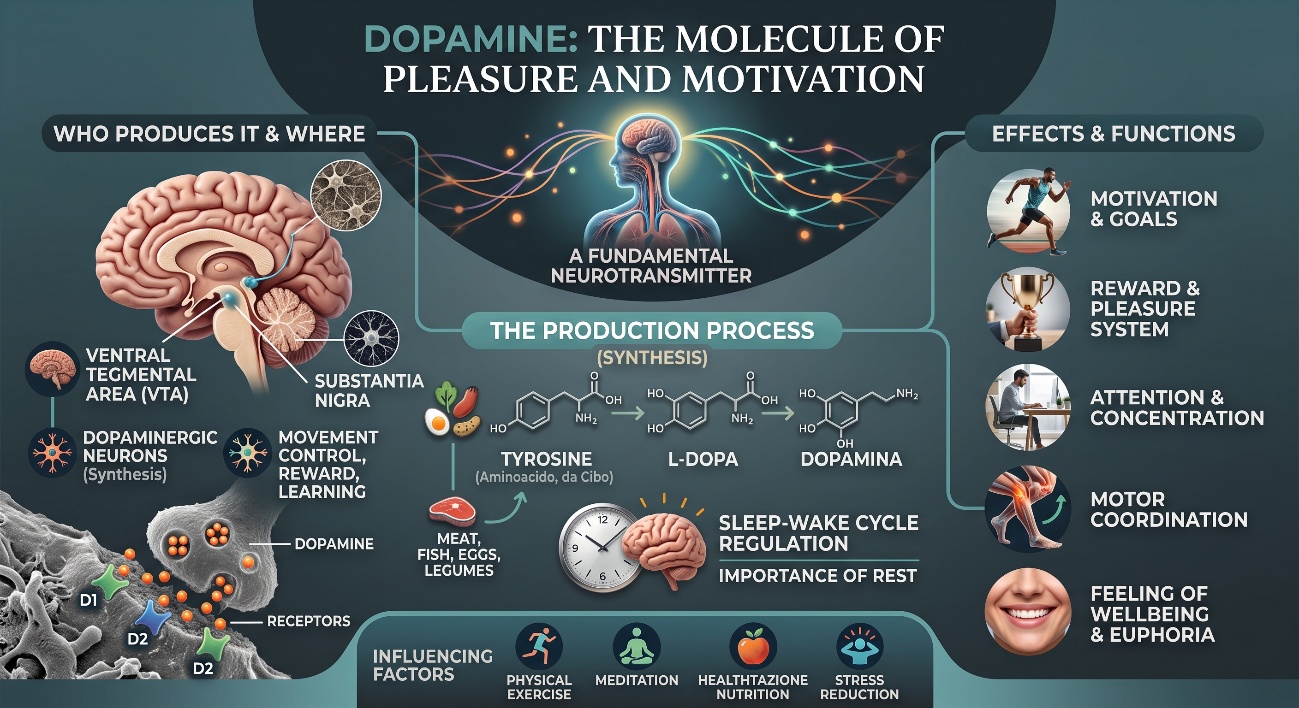
Dopamine: production and effects
Micromanagement: when excessive control becomes an obstacle
At the opposite extreme, excessive control and an authoritarian leadership style can increase the perception of threat. In the language of the SCARF model, micromanagement can undermine several dimensions simultaneously: it reduces Autonomy by restricting the individual’s room for choice; it can challenge professional Status by conveying the message that a person is not considered sufficiently competent; and it can reduce Certainty, particularly when expectations change constantly or oversight becomes unpredictable.
When this pressure becomes chronic, stress can interfere with the cognitive processes required to work effectively. Sustaining attention, adapting to new situations, generating creative solutions, and making well-considered decisions can all become more difficult.
The paradox is clear: in trying to gain greater control over work, we may end up undermining precisely the capabilities that make a team effective.

Micromanagement in action: more supervision, less room for initiative.
For this reason, an effective leader should leave space for autonomy, a sense of competence, and opportunities for growth. This does not mean eliminating control, but creating the conditions for people to take responsibility without feeling continuously threatened or judged.
Cortisol: when alertness becomes chronic
Cortisol is not “the bad hormone.” It follows a precise circadian rhythm, helps prepare us for activity upon waking, and mobilizes energy when needed. An acute increase in response to a challenge is a normal physiological response and, in many cases, a useful one.
The problem arises when stress becomes persistent.
Prolonged stress can have consequences at multiple levels:
- Cognitive: increased mental fatigue and difficulty maintaining attention and concentration.
- Emotional: increased irritability, anxiety, mood instability, and reduced motivation.
- Physical: sleep disturbances, fatigue, and alterations in immune function.
In a team consistently exposed to these conditions, the quality of work and the ability to achieve objectives can be significantly affected. And if the situation persists over time, the organization pays the price twice: through employee turnover and through the loss of expertise that no recruitment process can replace quickly.
Reducing Threat: Four Practical Actions
- Make what can be predicted predictable. Even bad news communicated in advance can be easier to manage than good news that arrives unexpectedly. Uncertainty, in itself, is already a source of cognitive load.
- Separate oversight from judgment. Asking for an update on a task does not necessarily signal a lack of trust. The difference lies in how the question is framed: you are monitoring the progress of the work, not judging the person’s value.
- Set the criteria in advance. Knowing the criteria by which one will be evaluated reduces uncertainty and makes the process more transparent. It is one of the simplest forms of fairness.
- Protect the right to make mistakes. A mistake that can be openly acknowledged can be corrected quickly. A mistake that has to be hidden, on the other hand, tends to grow larger before it can even be addressed. Psychological safety does not eliminate mistakes: it makes it possible to talk about them before they become a problem.
Psychological Safety
Research into group dynamics does not originate solely within universities. Some of the most influential studies in the history of organizational psychology have emerged directly from within organizations themselves.
The studies conducted at Western Electric’s Hawthorne Works during the 1920s and 1930s are the most famous example. Today, however, they should be interpreted with some caution: subsequent reanalyses of the data and methodology have challenged and substantially qualified the traditional interpretation of the so-called “Hawthorne effect.”
More recently, Google approached the same question from a different perspective through Project Aristotle, an extensive internal research initiative aimed at understanding what made some teams more effective than others.
Among the factors identified, one of the most important was a concept that psychologist Amy Edmondson had already been studying since the late 1990s: psychological safety.
It does not mean working in an environment free from conflict, pressure, or accountability. It means perceiving the group as a place where it is possible to take interpersonal risks without fearing negative consequences for one’s reputation or position.
Asking a question when something is unclear. Suggesting an idea that has not yet been fully developed. Admitting a mistake. Saying, “I disagree.” Asking for help.
These are simple behaviors, but they require one fundamental condition: confidence that speaking up will not automatically result in social or professional punishment.
And this is where psychological safety becomes particularly relevant to neuroleadership: when a person does not have to constantly expend mental resources protecting their position within the group, they can devote more of those resources to the problem the group is trying to solve.
What Project Aristotle Found
For approximately two years, Google studied its teams to understand which characteristics were associated with greater effectiveness. Numerous variables were considered, including members’ personalities, skills, experience, seniority, team size, and ways of working.
The initial hypothesis was intuitive: an excellent team should be made up of highly competent people, led by a good manager, and provided with adequate resources.
However, the findings shifted attention away from the composition of the team and toward its internal dynamics. More than who was part of the group, what seemed to matter was how people interacted with one another.
The Most Effective Teams were those in which members felt sufficiently free to express their opinions, ask questions, voice concerns, disagree, and admit mistakes without fearing negative consequences for their position within the group.
Google identified five dynamics associated with the most effective teams:
- Psychological safety — feeling safe to speak up and take interpersonal risks.
- Dependability — being able to rely on team members to complete their share of the work.
- Structure and clarity — having clear roles, goals, and expectations.
- Meaning — perceiving one’s work as meaningful.
- Impact — feeling that one’s work makes a tangible difference.
Among these, psychological safety emerged as the most important dynamic. This does not mean that the others were irrelevant, but rather that the ability to speak up without fear appeared to create a particularly favorable condition for collaboration, learning, and information sharing.
In the context analyzed by Google, there was no simple equation suggesting that bringing together particularly brilliant, senior, or extroverted individuals was enough to create an exceptional team. Even seemingly decisive factors, such as team size or working together in the same office, did not by themselves explain team effectiveness.
But the importance of social dynamics had already emerged from academic research as well.
In 2010, a study published in Science by Anita Woolley and colleagues showed that a group’s collective intelligence—its ability to perform effectively across a range of different tasks—was associated, among other factors, with two characteristics: a more balanced distribution of participation in conversation, in which the same individuals do not consistently dominate the discussion, and greater social sensitivity, meaning the ability to perceive and interpret the emotional states of others.
This is an important point: a group’s intelligence is not simply the sum of the intelligence of its members. It also depends on what happens within the relational space that emerges between them.
An important caveat is necessary, however. Project Aristotle was an internal research initiative conducted within a single organization and based primarily on correlational analyses; it therefore does not establish a cause-and-effect relationship and cannot automatically be generalized to every type of organization.
Its value lies primarily in bringing attention to a question that academic research had already begun to explore: it is not enough to ask how capable the individuals who make up a team are. We must also observe what happens when those individuals begin working together.
The message, essentially, is this: a group of exceptional individuals does not automatically become an exceptional team.
A team works when people feel that they can think, speak up, make mistakes, and disagree without fearing that they will lose credibility, their sense of belonging, or their value in the eyes of others.
The Leader as a Role Model
The behavior of a leader communicates through more than words alone. People continuously observe those around them and may align, often without fully realizing it, with the emotional states they perceive in others. This is known as emotional contagion, a phenomenon documented by decades of research on social interactions.
The tension of someone leading a meeting can become perceptible around the table even before a single word is spoken.
Mirror neurons are often cited in this context. However, it is worth exercising caution: in humans, direct evidence concerning their functioning is more limited than the evidence obtained in other species, and their role in empathy and emotional contagion remains a matter of scientific debate. The observable phenomenon itself, however, is well documented: people are sensitive to the emotional states and behaviors of those around them, even when they are not consciously aware of it.
For this reason, calmness, attentive listening, respect, and the ability to address problems without reacting impulsively can become a model for others. Tension, aggression, and excessive competitiveness can have exactly the same effect, but in the opposite direction.
A leader, therefore, does not communicate instructions alone: a leader communicates a way of being within the group.
Empathy and Trust
Another central element is empathy. Understanding other people’s perspectives and emotional states can improve the quality of relationships and contribute to the development of trust. Positive social interactions involve a range of psychological and neurobiological processes, including those involving oxytocin, a neuropeptide implicated in numerous processes related to affiliation, social bonding, and the regulation of interactions between individuals.
Here, an additional note of caution is needed—more than is often found in popular science. The work of Paul Zak helped popularize the link between oxytocin, trust, and cooperation, but subsequent research has produced more heterogeneous findings than the phrase “trust hormone” might suggest. Oxytocin does not simply appear to increase trust toward everyone: its effects depend on the context, the people involved, and the social meaning of the situation.
Some studies by Carsten De Dreu and colleagues have highlighted precisely this complexity: oxytocin may strengthen cooperation and cohesion toward members of one’s own group, while under certain conditions also being associated with greater distrust or competitiveness toward those perceived as belonging to an out-group.
This is anything but a minor detail for someone leading multiple teams that need to collaborate with one another. Creating a strong sense of belonging within a group does not automatically guarantee cooperation between different groups. If the identity of “us” becomes too rigid, it can even increase the perceived distance from “them.”
Trust, in other words, does not depend on a single molecule. It emerges from the interplay of experiences, behaviors, and context.
For a leader, this means something far less glamorous and much more demanding: building consistency, reciprocity, respect, and reliability over time.
No biochemical shortcut.
What Happens in the Brain in Response to a Positive Stimulus
The process, described in broad terms, is more complex than a simple cause-and-effect chain. Physical contact, a positive social interaction, or a situation perceived as safe are processed by multiple neural networks, including those involving the hypothalamus.
Within the hypothalamus, particularly in the paraventricular and supraoptic nuclei, oxytocin is synthesized. From there, the system can follow two main pathways: a peripheral pathway, through the posterior pituitary, which allows the hormone to be released into the bloodstream; and a central pathway, through release within the central nervous system, where oxytocin can modulate the activity of several brain regions involved in emotional processing, reward, and social interaction, including the amygdala.
This is a broad description and should be understood for what it is: a map, not a recipe. The effects of oxytocin are not always the same; they depend on the context, the relationships involved, and the meaning the brain assigns to the situation.
For anyone leading a team, however, the most interesting point is not the biochemistry itself, but what can be observed at the behavioral level. When an environment promotes listening, respect, and freedom from judgment, people may feel less need to defend themselves and may become more willing to share information, ask for help, and put forward ideas.
It is this space—more than any single hormone—that makes interpersonal risk possible: saying something before it is perfect, admitting that you do not know, and putting an idea on the table knowing that it can be challenged without that challenge becoming a judgment of the person.
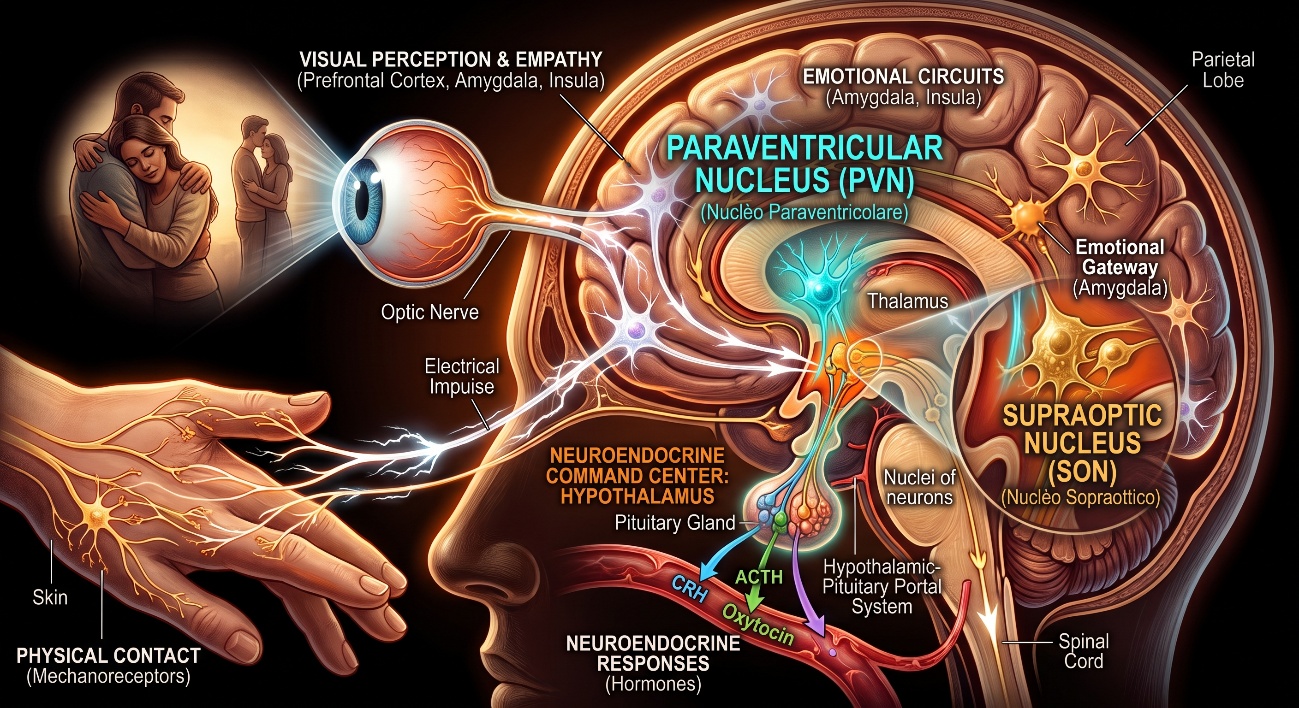
From Stimulus to Response: The Neuroendocrine Pathway of Oxytocin.
The Impact of AI on Teamwork

AI enters the team as a tool: what changes is who knows how to use it—and who feels threatened by it.
Everything we have discussed so far is now facing an unexpected testing ground: the integration of artificial intelligence into work teams.
It is interesting to observe how some of the discomfort surrounding this transformation can be understood, almost point by point, through the five dimensions we discussed at the beginning.
AI can challenge the Status of people who, until that point, had been regarded as the fastest or most competent at performing a particular task. It reduces Certainty, because for many people it is still unclear how their work will change over the coming years. And it can affect Autonomy when it is introduced as a top-down requirement rather than as a tool that people are given the opportunity to learn and integrate into their own way of working.
Viewed instead through the lens of transformational leadership, AI can become a tool that does not necessarily replace the team, but can amplify its capabilities and possibilities. However efficient it may be in terms of time—as we have already explored in previous articles and in the book AInima—its effectiveness also depends on the quality of its use and on the ability to verify its outputs.
Generative AI systems, in fact, are not manually programmed to produce every individual response. During training, they learn patterns from large amounts of data and, when given a prompt, generate a response based on those learned patterns. A response can therefore be plausible, coherent, and even highly convincing without necessarily being correct.
For this reason, human verification is not a relic of the past to be eliminated through automation: it is a structural part of working with AI.
From a team perspective, however, the introduction of AI can take on very different forms.
As with any new tool, skills are required to use it effectively. Where the necessary background or expertise is lacking, AI can end up adding work rather than reducing it, because its output must be understood, verified, corrected, and, when necessary, redone.
In other cases, it can trigger competitive dynamics, even fueling the fear of being replaced.
These concerns are legitimate. They become particularly problematic, however, precisely where psychological safety is low.
If admitting “I don't know how to use this tool” is equivalent to declaring oneself incompetent or obsolete, no one will admit it.
And at that point, the organization will not simply have a skills gap: it will have lost the ability to see where those skills are actually missing.
What the Numbers Tell Us
From an economic perspective, the overall direction is clear, but the scale of the impact remains uncertain. The Future of Jobs Report 2025 published by the World Economic Forum, based on responses from more than 1,000 employers across 55 economies, estimates that by 2030, major technological, economic, and demographic shifts could contribute to the creation of 170 million new roles, while 92 million roles could be displaced or transformed, resulting in a net increase of approximately 78 million jobs. These are projections of the overall evolution of the labor market, not a forecast of the impact of AI alone.
The impact is also far from uniform. Analyses by the OECD show that AI is changing the content of occupations and the skills they require, including jobs that do not require specialized machine-learning expertise. In occupations with greater exposure to AI, digital skills are becoming increasingly important alongside managerial, organizational, and interpersonal capabilities.
The most closely watched signal now comes from the Stanford Digital Economy Lab. In the latest revision, published in August 2026, Erik Brynjolfsson, Bharat Chandar, and Ruyu Chen analyzed employment and earnings data from ADP covering millions of U.S. workers. They do not observe generalized worker displacement, but rather a much more concentrated phenomenon: among workers aged 22 to 25, employment in occupations with greater AI exposure is approximately 19% lower than would have been expected had it followed the trajectory of their peers in less AI-exposed occupations. The effect appears to be driven primarily by a reduction in new hiring rather than by an increase in layoffs.
This is an important finding, but it needs to be interpreted carefully. The authors themselves emphasize that the evidence is descriptive rather than causal: the data do not establish how much of the observed difference is actually caused by AI and how much may be attributable to other changes in the labor market. The finding should therefore be viewed as an early signal, not as a definitive verdict.
On the other hand, demand for AI-related and digital-transformation skills is growing. Alongside machine-learning and data-analysis specialists, complementary skills are becoming increasingly important: problem-solving, communication, creativity, collaboration, and the ability to integrate AI into work processes.
This is why many studies emphasize reskilling and continuous skills development. Not as a slogan, but as a practical response to the rapidly widening gap between what technology makes possible and what people actually know how to do with it.
Finally, ethical and social issues remain: the limitations of AI systems, the risk that AI adoption could widen certain inequalities, and the gap between large organizations and SMEs, which may face greater difficulties in accessing the technologies, data, and expertise required to use them effectively.
What Leaders Can Do in Practice
- Be clear about how AI will be used. Ambiguity around AI can become a powerful source of anxiety within teams. Even establishing clear boundaries—“we will use it here, but not there”—reduces uncertainty and makes change more predictable.
- Make it safe not to know. People who fear appearing obsolete tend to hide their difficulties rather than ask for help. And when people hide what they do not know how to do, the organization loses an accurate map of its actual capabilities.
- Give people time, not just access. A tool without sufficient time to learn and integrate it into work processes can become an additional burden disguised as a benefit.
- Reallocate the time saved. If every hour saved through AI is immediately filled with more work, the message people receive is that the purpose of automation was simply to increase the pace. If, instead, some of that time is returned to higher-quality work, learning, creativity, or collaboration, AI can become a genuine instrument of transformation.
In Conclusion
Artificial intelligence is now a widespread reality, reshaping the way we live and work.
Rather than giving in to fear—an emotion that, as research confirms, can narrow our thinking and hinder learning—it is worth treating AI for what it is: a change in the tools we use within work that remains fundamentally human. It allows us to delegate routine tasks and gives us back the space to bring forward, and in many cases rediscover, the authentic core of our value: creativity, empathy, and the ability to find meaning in what we do.
But the thread connecting this entire article is not technology. It is the same principle that underpinned Google’s teams, the neural circuits of motivation, and the physiology of stress. People perform at their best when they do not have to defend themselves. Whether the threat comes from a manager who scrutinizes every line of work, an impossible deadline, or software that appears to know more than they do, the brain’s response is similar—and so can be the response of the person leading the team.
And this is where the role of the leader comes back into focus.
Do not eliminate every difficulty.
Do not protect people from every mistake.
Do not carry the weight for others; instead, support them in learning how to carry the weight themselves.
Comments
Leave a comment